


A Baby Great White in the Adriatic — And What It Tells Us About the Mediterranean's Most Mysterious Sharks
25 June 2026 | White Shark Ocean
Published this morning, a new paper in the Journal of Marine Science and Engineering has reconfirmed something that a small group of Croatian scientists have been arguing since 2023: that a juvenile great white shark was caught in the Adriatic Sea near Rogoznica, Croatia — and that it was a young-of-the-year pup.
In other words: a newborn.
If the identification holds — and an international team spanning almost every continent now says it does — this is one of the most quietly significant great white shark findings in recent memory. Not because of the drama of the catch itself, but because of what a newborn great white in the Adriatic means for one of the ocean's deepest unsolved mysteries.

What Was Caught, and Where
On 12 September 2023, fishermen operating approximately four nautical miles southwest of the island of Svilan near Rogoznica, on Croatia's Dalmatian coast, hauled up a small shark from a depth of 100 to 120 metres. It measured between 1.20 and 1.30 metres in total length and weighed approximately 20 kilograms.
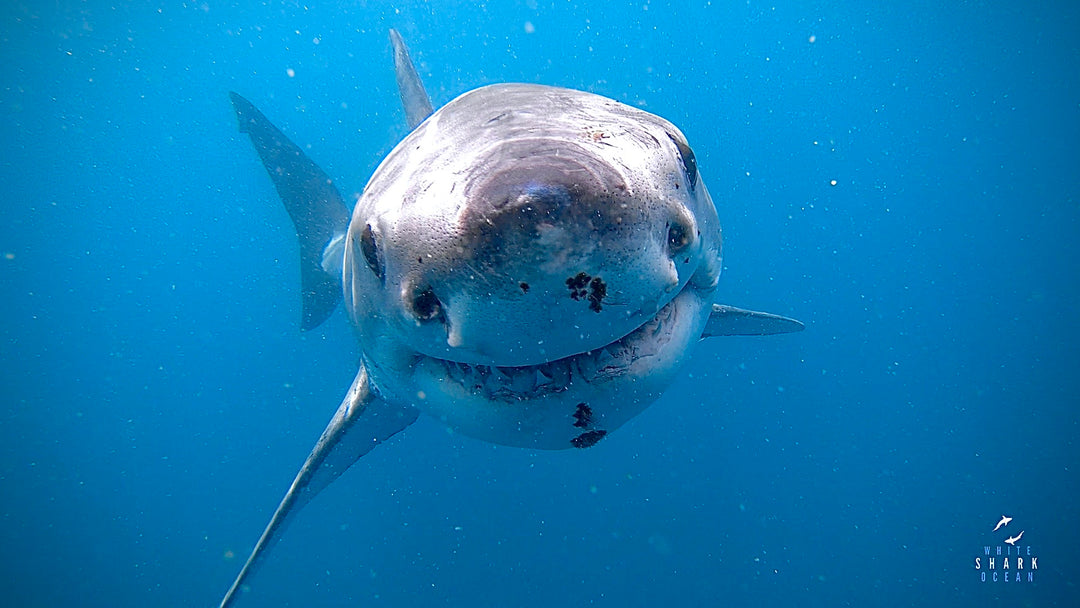
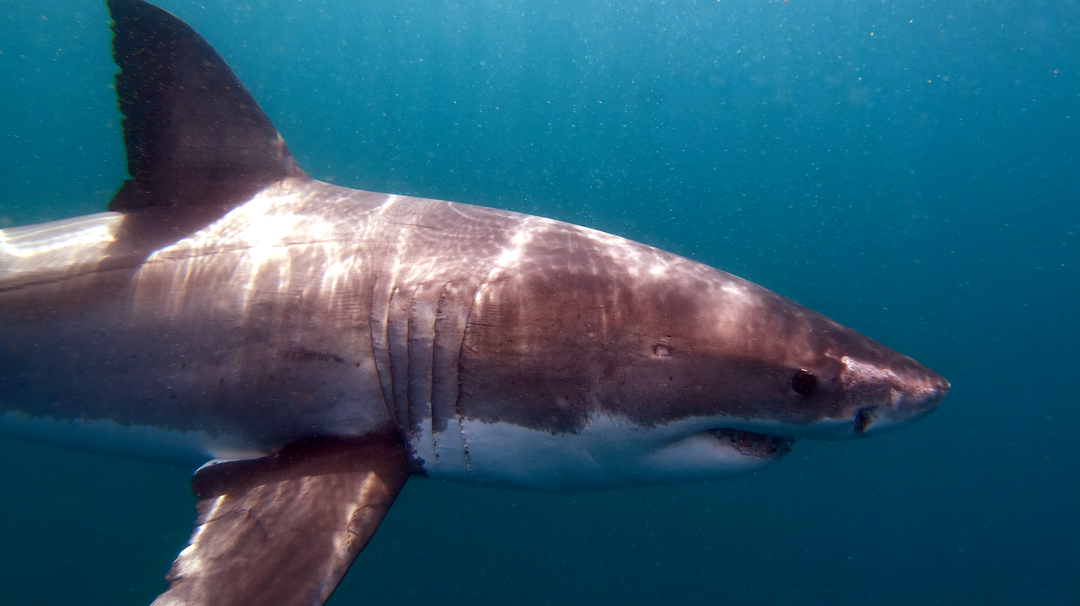
Researchers at the Institute of Oceanography and Fisheries in Split identified it as a young-of-the-year (YOY) great white shark — that is, an individual born within the same calendar year it was caught. The identification was based on a combination of morphological characteristics: the distinctive pectoral-fin markings, the shape of the dorsal fin, and the absence of a white rear dorsal-fin tip, all consistent with juvenile Carcharodon carcharias.
The original research was published and then challenged by a later scientific comment questioning the identification. This is normal scientific process — rare species records, especially from unexpected locations, attract scrutiny. The Institute responded by assembling an international team of white shark specialists, who carried out a detailed review of all available evidence and have now published their response reconfirming the original identification in the Journal of Marine Science and Engineering.
The specimen is described in the paper as the only unambiguous record of a young-of-the-year great white in the entire Adriatic Sea.
Why a Newborn Changes Everything
Great white sharks are viviparous — they give birth to live young. A pup measuring 1.2 metres was not born far away and then swam into the Adriatic. Newborn great whites are not long-distance migrants. They are found close to where they were born.
That single biological fact transforms the Rogoznica specimen from an interesting sighting into something more consequential. If a newborn great white was caught in the Adriatic in September 2023, then a pregnant female — or a birth event — occurred somewhere in or immediately adjacent to that body of water earlier that year. Somewhere in the Mediterranean, a great white shark gave birth. And nobody knows where.
This connects directly to what we know about the broader Mediterranean population. As we covered in our post on the Ghost Sharks of the Mediterranean, the 2020 University of Bologna genetics study confirmed that Mediterranean great whites have been genetically isolated from Atlantic populations for approximately 3.2 million years. They are a self-sustaining lineage. They must be reproducing somewhere. The Rogoznica specimen is the first direct physical evidence of where the next generation might be coming from.
The Birth Mystery Deepens
Where great white sharks give birth remains one of the most enduring unsolved questions in marine biology. No nursery ground has ever been positively identified anywhere in the world. In the Mediterranean, the question is particularly acute: with a tiny, critically endangered population, finding the pupping ground is not just scientifically interesting — it is an absolute conservation priority. You cannot protect what you cannot find.
The Rogoznica catch adds a data point. The Adriatic — or the wider central Mediterranean near the Dalmatian coast — is now a candidate zone. The depth at which the pup was caught (100 to 120 metres) is consistent with deep-water habitat that great white sharks favour, away from the heavy boat traffic and fishing activity of Croatia's tourist-season coastline. It is not an impossible location for a birth or early nursery area.
Earlier this year, marine biologists Carlos Gauna and Phillip Sternes described drone footage from California that may have captured a great white birth for the first time ever — a newborn pup still covered in what appeared to be uterine fluid. The Rogoznica specimen and the California footage are unconnected, but together they point toward the same conclusion: birth events in great white sharks are happening, we are occasionally catching glimpses of them, and every piece of evidence brings us incrementally closer to understanding where and how.
The Science Behind the Identification
The peer review process that this finding has gone through is worth noting. When the original identification was challenged, the Croatian research team did not simply reassert their conclusion — they brought in an international network of white shark specialists and submitted the case to detailed expert scrutiny. The resulting response paper is a model of how rare species records should be handled: transparent, evidence-based, and open to challenge.
The identification rests on a combination of morphological markers specific to juvenile Carcharodon carcharias that distinguish it from other shark species found in the Adriatic. The pectoral-fin markings, the dorsal-fin profile, and the absence of specific features seen in look-alike species together form a diagnostic picture that the international team found convincing. The Journal of Marine Science and Engineering is a peer-reviewed MDPI publication with established credibility in marine biology research.
Croatia Week, which broke the English-language story this morning, is Croatia's leading English-language news outlet and was reporting directly from the Institute's announcement.
One More Piece of a Larger Puzzle
Great white shark encounters in the Adriatic are extraordinarily rare. The sea is heavily trafficked, intensively fished, and relatively shallow across much of its extent — not ideal habitat for a species that prefers deeper, cooler, less disturbed water. The Dalmatian coast, with its deeper channels and historic fish populations, represents the more plausible habitat. But even here, confirmed sightings can be counted on one hand.
For the Mediterranean ghost population — that genetically isolated, critically endangered lineage that has been quietly persisting in these waters for over three million years — the Rogoznica pup is both a cause for cautious hope and a reminder of urgency. Active reproduction means the population has not yet crossed the threshold beyond which recovery becomes biologically impossible. But with at least 40 individuals killed in North African waters in 2025 alone (as we reported yesterday), and no coordinated protection programme in place, the window may be narrowing faster than the science can keep up.
A baby great white in the Adriatic. It is 1.2 metres long, 20 kilograms, and born somewhere in one of the most fished stretches of water on earth. It is, right now, the most important great white shark in the Mediterranean.
To experience great white sharks in their natural habitat while supporting conservation, join us in Mossel Bay. Book with White Shark Ocean at whitesharkocean.com.
Frequently Asked Questions
Has a great white shark been confirmed in the Adriatic Sea?
Yes. A juvenile great white shark caught near Rogoznica, Croatia in September 2023 has now been confirmed by an international team of specialists as a young-of-the-year (newborn) Carcharodon carcharias. The identification, originally published by Croatia's Institute of Oceanography and Fisheries in Split, was challenged and then reconfirmed in a peer-reviewed response published on 25 June 2026 in the Journal of Marine Science and Engineering. It is described as the only unambiguous record of a young-of-the-year great white in the Adriatic Sea.
What does a young-of-the-year great white shark mean?
A young-of-the-year (YOY) shark is one that was born in the same calendar year it was caught. Great white sharks are viviparous — they give birth to live young — and newborn pups are not capable of long-distance migration. Finding a newborn great white in the Adriatic strongly implies that a birth event occurred in or very close to the Adriatic earlier in 2023. It is indirect evidence that Mediterranean great whites are actively reproducing, and that some part of the central Mediterranean or Adriatic may function as a nursery habitat.
Are great white sharks native to the Mediterranean?
Yes. Mediterranean great white sharks are a genetically distinct population that has been isolated from Atlantic populations for approximately 3.2 million years — confirmed by a 2020 University of Bologna genetics study. They are not occasional visitors from the Atlantic but a self-sustaining local lineage that has persisted in the Mediterranean since the Late Pliocene epoch. The population is classified as Critically Endangered by the IUCN.
Where do great white sharks give birth in the Mediterranean?
This is one of the most important unanswered questions in Mediterranean shark biology. No pupping ground or nursery area has ever been positively identified in the Mediterranean. The 2023 Rogoznica specimen — a newborn caught at 100–120 metres depth near Croatia's Dalmatian coast — adds a significant data point suggesting the central Adriatic or nearby waters may play a role. Finding and protecting the Mediterranean pupping ground is considered a critical conservation priority, but it has not yet been achieved.
How rare are great white sharks in Croatia and the Adriatic?
Extremely rare. Confirmed great white sightings in the Adriatic can be counted on one hand in the historical record. The sea's heavy fishing pressure, relatively shallow basin across much of its extent, and high boat traffic make it marginal habitat for a species that prefers deeper, less disturbed water. The deeper channels along Croatia's Dalmatian coast represent the most plausible habitat. The 2023 Rogoznica specimen is the most significant confirmed Adriatic great white record in decades.







Leave a comment