



73 Million Sharks a Year: The Brutal Economics of the Fin Trade
13 July 2026 | White Shark Ocean
Every year, somewhere between 73 and 100 million sharks are killed. The range in the estimate reflects the difficulty of counting something that happens largely out of sight, across the world's oceans, in international waters and in ports where documentation is incomplete. The lower number represents sharks killed specifically for their fins. The higher number includes all shark mortality from human activity. Either figure is large enough that understanding it requires confronting some uncomfortable economics.
Shark fin soup is not a staple food. It is a prestige dish. The fin itself, once dried and prepared, has almost no flavour — the taste comes from the surrounding broth. What the fin provides is texture and status. A bowl can cost $100. A single large fin can sell for more than $1,300. The global shark fin trade is estimated to be worth between $400 million and $550 million annually. Those numbers create the incentive structure that kills 73 million sharks per year, and they explain why decades of legislation have not stopped it.

What Finning Actually Is
Shark finning refers to the practice of removing a shark's fins at sea and discarding the rest of the body. A shark carcass is bulky and low-value relative to its fins — the flesh is worth little, the cartilage less. Bringing a whole shark to port takes up hold space that could carry more fins. So the fins are cut, the living shark is returned to the water, and the shark dies: unable to swim, it sinks and drowns or is eaten alive by other predators.
The practice is efficient from a purely economic standpoint. It is also brutal, and the imagery of finned sharks drowning on the ocean floor became the focal point of shark conservation campaigns in the 1990s and 2000s. Those campaigns produced legislation. More than 50 countries now have some form of shark finning ban. The United States enacted the Shark Fin Sales Elimination Act in December 2022, making it illegal to possess, buy, sell, or transport shark fins anywhere in US territory. The European Union introduced 13 new tariff codes for shark products in January 2025 to allow more precise tracking of the species flowing through European ports.
And yet, in 2024, a peer-reviewed study found that global shark fishing mortality had actually increased — from 76 million to 80 million sharks per year — during the period when protective legislation increased tenfold. Something is not working.
The Gaps in the Law
The persistence of the trade despite widespread legislation reflects the gap between what laws say and what they can enforce.
The most fundamental gap is the distinction between finning and fin trading. Many countries ban finning — the removal of fins at sea and discarding of the body — without banning the import or sale of fins that were finned elsewhere. A vessel that removes shark fins in international waters or in a country with weak enforcement can land those fins in a country with a finning ban without necessarily violating any law, because the ban covers finning, not possession. The United States' 2022 law is stronger than most precisely because it targets the entire supply chain, not just the act of finning.
A second gap is species identification. Shark fin soup rarely identifies which species of shark the fin came from. Once dried, fins from different species look similar enough that distinguishing them requires genetic testing. Of the more than 500 known shark species, roughly 30% of the shark fins in trade come from species listed as threatened with extinction under IUCN criteria. A 2024 study found that fins from 4 out of every 5 shark species regulated under CITES — the international wildlife trade treaty — remained common in Hong Kong's markets even though little to no legal trade in those species had been reported since the regulations took effect in 2014. The fins are present. The paperwork says they should not be.
A third gap is the ocean itself. Sharks migrate across jurisdictions. A shark that spends part of its year in protected waters, part in open ocean, and part in waters with no meaningful enforcement can be caught legally in one place and processed illegally in another. Effective shark protection requires that the rules be consistent across every jurisdiction the sharks pass through — and they are not.
Where the Fins Go
The shark fin trade flows primarily to Asian markets, with Hong Kong functioning as the world's largest trading hub. At its peak in the 1990s, Hong Kong handled approximately 50% of global shark fin imports. That figure has declined as consumer attitudes have shifted and as some high-profile campaigns succeeded in removing shark fin soup from corporate banquets and government functions in mainland China. Major hotel chains, airlines, and state-owned enterprises publicly committed to removing shark fin soup from their menus in the 2010s.
The commitments produced measurable results — Hong Kong's shark fin imports declined significantly through the 2010s. But they did not eliminate the trade. Demand remained in private dining, wedding banquets, and among older demographics for whom shark fin soup carries deep cultural significance as a mark of respect and prosperity for guests. The trade adapted rather than disappearing: shifting toward lower-cost fins from smaller species, toward less visible markets, and toward online sales channels that are harder to monitor.
The most commonly traded species by volume is the blue shark. Blue sharks are among the most abundant shark species in the open ocean and their fins are lower in value than those of larger, rarer species. Their abundance makes them a primary target precisely because they can be harvested at scale. The blue shark is currently listed as Near Threatened on the IUCN Red List. The same fishing pressure that makes it the dominant species in fin trade statistics is the reason it is moving toward a more serious threat category.
Great White Sharks and the Fin Trade
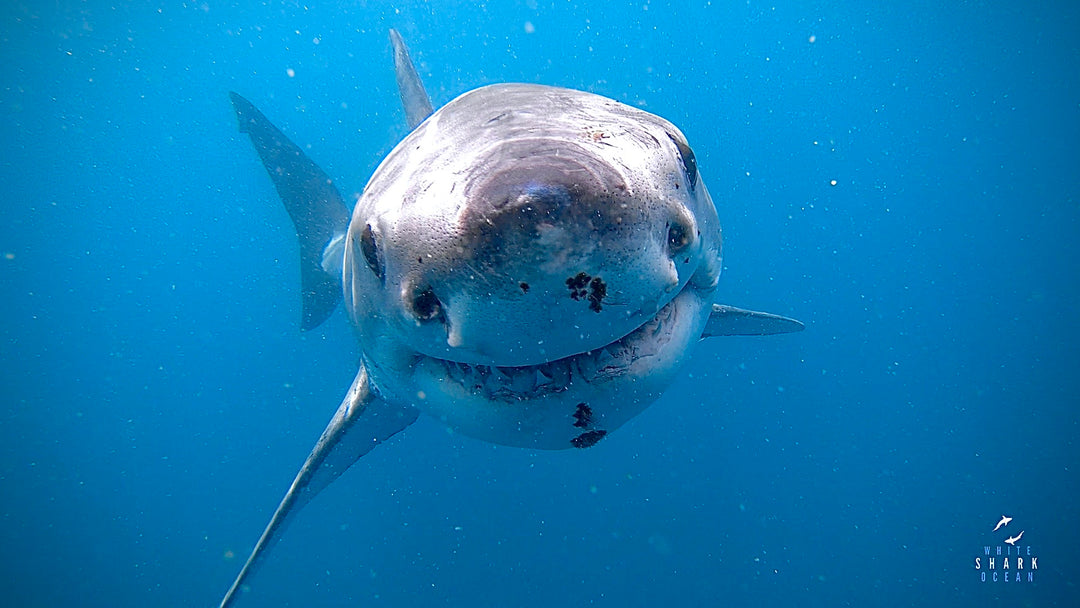
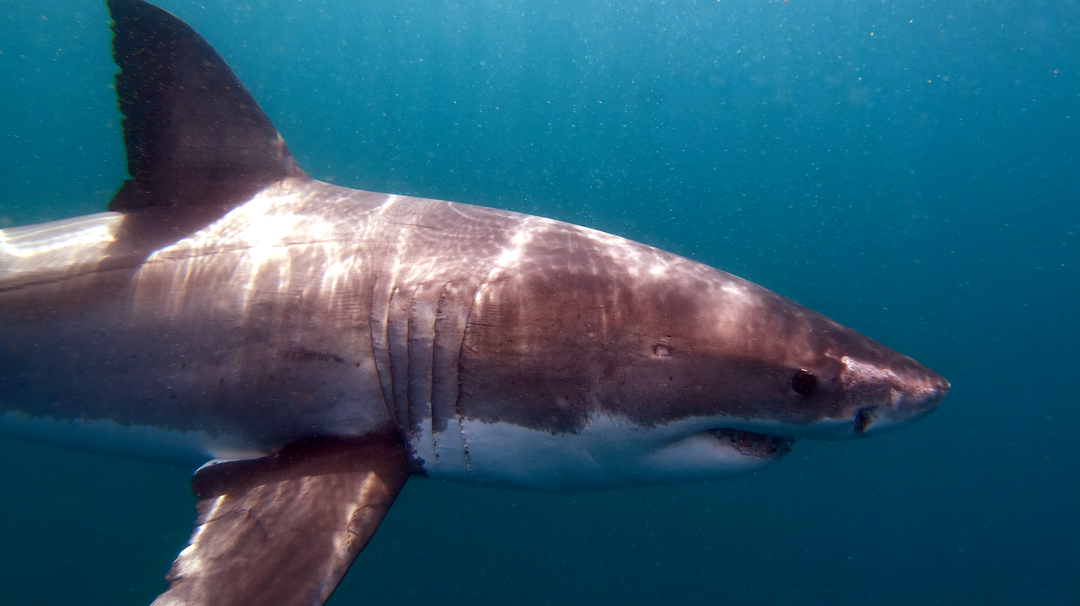
Great white sharks are listed on CITES Appendix II, meaning international trade in their parts requires permits demonstrating that the trade is legal and non-detrimental to wild populations. They are protected under national law in South Africa, Australia, the United States, and many other countries.
Despite this, great white shark fins appear in markets. The mechanisms vary: accidental bycatch that is misreported, deliberate targeting in jurisdictions where enforcement is weak or absent, and the near-impossibility of tracing individual fins through a supply chain that spans multiple countries and multiple species. A dried fin in a Hong Kong market carries no documentation of where in the world the shark was caught.
For a species with an estimated global population in the thousands — and with regional populations small enough that a 2025 Australian study counted fewer than 500 breeding adults on the entire Australian coastline — even marginal additional mortality from fin trade is conservation-significant. Great white sharks reach reproductive maturity late, live long, and produce very few offspring. There is no version of meaningful fin trade in great white sharks that is sustainable. The numbers simply do not allow it.
What Would Actually Work
The history of shark fin legislation suggests that partial measures produce partial results, while the trade adapts around them. The most effective interventions share a common characteristic: they target the entire supply chain rather than any single point in it.
The US Shark Fin Sales Elimination Act is the closest model to this approach among existing national laws. By making it illegal to possess, buy, sell, or transport fins anywhere in US territory — regardless of where they were obtained — it eliminates the domestic market and removes the United States from the global supply chain. Similar comprehensive bans in other major consumer and transit markets would progressively reduce the economic infrastructure that makes large-scale finning viable.
Consumer change also matters, though it is slower and less certain than legislation. The decline in shark fin consumption among younger generations in China and among Chinese diaspora communities in other countries is real and documented. Cultural practices shift, particularly when they become associated with environmental damage. The most significant driver of reduced demand in China over the past decade has been shifting consumer attitudes, particularly among urban young people, rather than legislation alone.
Neither approach alone is sufficient, and neither has yet been sufficient together. Eighty million sharks a year is still the answer to the question of how many are being killed. The legislation exists. The consumer attitudes are shifting. The number is still going up.
White Shark Ocean is committed to great white shark conservation. Every cage dive and surface encounter we operate contributes to a living economy built around sharks in the water rather than sharks on the market. Book at whitesharkocean.com.
Frequently Asked Questions
How many sharks are killed for their fins each year?
Approximately 73 million sharks are killed annually specifically linked to the shark fin trade, out of a total estimated shark mortality from human activity of around 100 million per year. A 2024 peer-reviewed study found that global shark fishing mortality had increased to 76–80 million sharks per year during a period when protective legislation increased tenfold — indicating that existing laws are not reducing overall mortality at the scale required. More than 30% of fins in trade come from species currently listed as threatened with extinction.
Why is shark fin soup so valuable?
Shark fin soup is a prestige dish in Chinese culinary culture, historically associated with wealth, generosity toward guests, and social status. The fin itself contributes little flavour — the taste comes from the broth — but provides a distinctive gelatinous texture that has made the dish a traditional centrepiece of banquets, weddings, and formal business meals. A bowl can cost $100 or more, and a single large fin can sell for over $1,300. The global shark fin trade is estimated to be worth $400–550 million annually. This economic value is the primary driver of large-scale shark mortality.
Is shark finning banned?
More than 50 countries have some form of shark finning ban, but the laws vary significantly in scope and enforcement. Many bans target only the act of removing fins at sea and discarding the body, without prohibiting the import or sale of fins obtained elsewhere. The United States' Shark Fin Sales Elimination Act, enacted in December 2022, is among the most comprehensive national laws, making it illegal to possess, buy, sell, or transport shark fins anywhere in US territory regardless of origin. The European Union introduced enhanced monitoring measures in January 2025. Despite these measures, research has found that fins from species protected under international trade treaties remain widely available in major markets.
Are great white sharks affected by the fin trade?
Great white sharks are listed on CITES Appendix II and protected under national law in many jurisdictions, but their fins still appear in markets, likely through misreported bycatch and illegal trade. For a species with an estimated global population in the thousands — and regional populations as small as a few hundred breeding adults — any additional mortality from fin trade is conservation-significant. Great white sharks reproduce slowly, with females not reaching maturity until around 33 years of age and producing very few pups per pregnancy. There is no biologically sustainable level of targeted fin trade in great white sharks.
What is the most commonly traded shark species in the fin trade?
The blue shark is the most commonly traded shark species by volume in the global fin trade. Blue sharks are among the most abundant pelagic shark species and are caught as both targeted catch and bycatch across much of the open ocean. Their abundance makes them an economically viable large-scale target even at lower per-fin values than rarer species. The blue shark is currently listed as Near Threatened on the IUCN Red List, and ongoing fishing pressure from the fin trade is a primary factor in the concern about its population trajectory.







Leave a comment