


The Silent Unraveling: What Happens When Great White Sharks Vanish?
17 June 2026 | White Shark Ocean
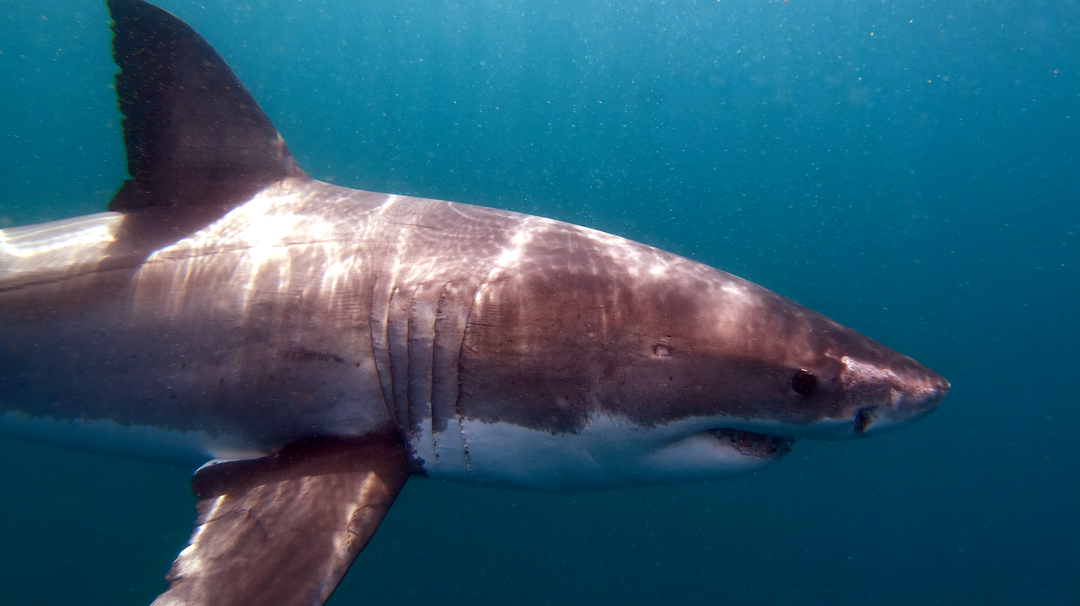
False Bay, on South Africa's southwestern tip, was once the most reliable place on Earth to see a great white shark. For decades, these apex predators gathered around Seal Island in the heart of the bay, drawn by one of the densest colonies of Cape fur seals in the world. Researchers, filmmakers and wildlife enthusiasts came from every corner of the globe to witness the spectacle.
Then, between 2015 and 2019, the sharks disappeared.
Not gradually. Not seasonally. Within three and a half years, great white shark sightings in False Bay dropped to near zero. And what came next, according to a landmark study published in Frontiers in Marine Science, is one of the most dramatic demonstrations of ecological collapse ever documented in the ocean.

Twenty Years of Data, One Stark Conclusion
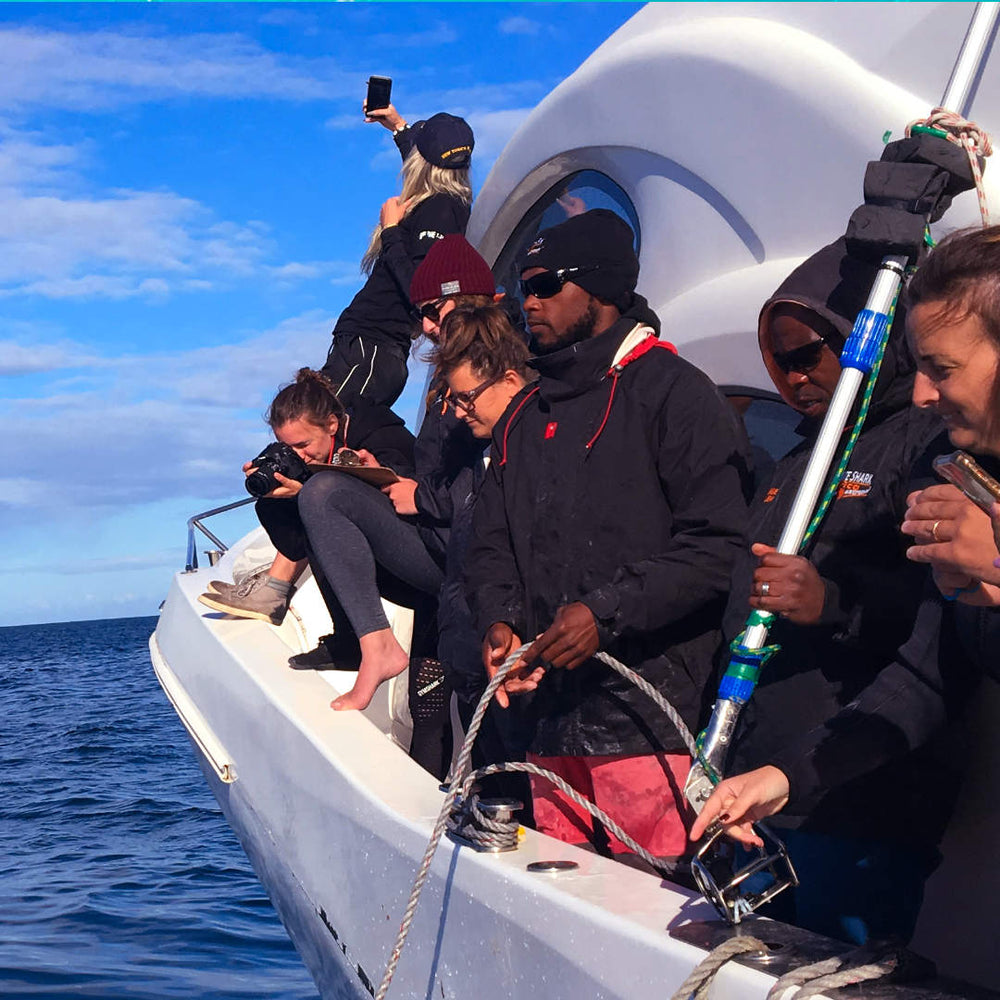
Dr. Neil Hammerschlag, marine ecologist and CEO of the Shark Research Foundation, spent more than two decades monitoring the waters around False Bay's Seal Island. His team combined long-term boat surveys, baited remote underwater video (BRUVS) and citizen science observations to build a picture of what happened when the bay's apex predator vanished.
What they found was a textbook trophic cascade — a domino effect that rippled from the top of the food chain all the way to the bottom.
"As Neil showed, in less than 10 years, the entire ecosystem of an entire bay completely changed," said Enrico Gennari, director of the Oceans Research Institute in South Africa, who has monitored white sharks in the region for many years.
The Chain Reaction
With great white sharks gone, their prey was suddenly free from the threat of predation. Cape fur seal sightings in the study area surged by 522%. Sevengill sharks — which had previously kept their distance in the kelp forests more than 20 kilometres from Seal Island — began appearing right at the research boats.
"We started seeing sevengill sharks at the boat instead of great whites, which was mind-blowing," said Hammerschlag.
But it wasn't just about numbers. The behaviour of these animals changed fundamentally. Seals, once tightly clustered near the shore in fear of ambush, began rafting in the open deep water — places they historically would never have ventured. A follow-up study by Hammerschlag found their cortisol levels had dropped significantly, reflecting an animal no longer living in fear.
That boldness came at a cost further down the chain. With more seals eating more fish, populations of Cape horse mackerel and anchovies began declining. Sevengill sharks, now the de facto apex predators of the bay, began putting greater pressure on smaller benthic sharks like pyjama catsharks and smooth-hound sharks.
A Cascade With No End
The ripple effects reached species far removed from any direct interaction with great whites. Critically endangered African penguins, which share habitat with the now-emboldened seal colonies, are facing increased predation pressure. And since mid-2024, a rabies outbreak has spread through the Western Cape seal population, reaching Mossel Bay in July of that year. Healthy apex predator populations help contain such outbreaks by culling sick and weakened animals — a function the great whites can no longer perform.
"Without great whites, fewer seals and sevengill sharks are being eaten, and also, they're not afraid anymore — their physiology changes," Hammerschlag noted. "It looked like they no longer feared the sharks."
Why Did the Sharks Leave?
The cause of the disappearance remains debated, but two factors stand out. The notorious orca pair Port and Starboard — first documented near Gansbaai in 2015 — developed a lethal specialisation in extracting the livers of great white sharks with surgical precision. Their presence alone, and the scent of shark liver oil released during a kill, is enough to trigger a mass exodus. Other great whites in the area flee and do not return.
But Hammerschlag and Gennari point to a deeper problem: decades of mortality from shark nets and drum lines along the South African coast have steadily weakened the national population. "We know the distributions of white sharks in South Africa used to span from False Bay to Mozambique," said Gennari. "If they are killed in KwaZulu-Natal, the population number goes down and the distribution shrinks from both edges."
Globally, shark populations have halved since 1970. A population already under pressure has far less resilience to any additional shock — natural or otherwise.
Closer to Home: Mossel Bay and Beyond
The findings from False Bay are not isolated. Hammerschlag's study specifically flags similar declines in great white sightings at other South African hotspots — including Mossel Bay, Gansbaai, Plettenberg Bay and Algoa Bay. The same story, playing out across a coastline that was once the global heartland of great white shark abundance.
For those of us who work and dive in these waters, these are not abstract statistics. They are changes we can see. The great white shark is not just an iconic animal — it is the architect of the entire ecosystem it inhabits. Remove it, and everything shifts in ways that are difficult to reverse and even harder to predict.
What It Means
"We need white sharks in our waters to maintain the balance of the ecosystem," said Gennari. The research makes a compelling case that protecting great white sharks is not sentimental — it is structural. Every fishing net that kills a shark, every drum line, every unregulated bycatch event chips away at a population that holds entire marine food webs together.
The great white shark has survived 45 million years of planetary change. But the pace of human pressure is something evolution has never had to contend with before. False Bay is the warning. The question is whether we act before other bays deliver the same verdict.
Want to see great white sharks in their natural habitat and support the work of shark conservation in Mossel Bay? Visit whitesharkocean.com.
Frequently Asked Questions
What is a trophic cascade?
A trophic cascade is a chain reaction triggered by the removal of a top predator from an ecosystem. When apex predators like great white sharks disappear, their prey species — such as seals — overpopulate and become bolder, which in turn increases pressure on the species below them in the food chain. The effects ripple downwards through the entire ecosystem, often in ways that are difficult to predict or reverse. The collapse of False Bay's ecosystem after great white sharks disappeared is one of the most dramatic trophic cascades ever documented in the ocean.
Why did great white sharks disappear from False Bay?
The most likely causes are a combination of orca predation and long-term population depletion. The orca pair known as Port and Starboard developed a specialisation in killing great white sharks and extracting their livers. The presence of these orcas — and the scent of shark liver oil after a kill — is enough to drive great whites from an area permanently. However, researchers believe the population was already weakened by decades of shark net and drum line mortality along the South African coast, leaving it with less resilience to withstand this additional pressure.
Are there still great white sharks in Mossel Bay?
Yes — great white sharks are still present in Mossel Bay, though sightings have become less predictable than in previous decades. White Shark Ocean continues to operate shark encounters in Mossel Bay and monitors shark activity in the area closely. The bay remains one of the most important great white shark habitats in South Africa and is central to ongoing conservation efforts.
Who are Port and Starboard, and are they still active?
Port and Starboard are a pair of orcas first documented near Gansbaai, South Africa, in 2015. They are named for their distinctively collapsed dorsal fins — one collapsed to the left (port), one to the right (starboard). They became notorious for developing a highly specialised technique of killing great white sharks and extracting their livers with surgical precision. As of 2025–2026, both orcas remain active in South African waters and continue to influence great white shark distribution along the coast.
How can I help protect great white sharks in South Africa?
The most direct way to support great white shark conservation is to choose responsible eco-tourism operators — visits to reputable shark encounter operations contribute directly to conservation funding and research. You can also support organisations working to end shark nets and drum lines on South African beaches, reduce bycatch in commercial fisheries, and push for stronger marine protected area legislation. Spreading accurate information about sharks — countering fear-based narratives with science — also makes a real difference to public attitudes and policy.




Leave a comment