


The Ghost Sharks of the Mediterranean: A 3.2-Million-Year Mystery
18 June 2026 | White Shark Ocean
In late May 2026, a diver exploring the waters off Sicily uploaded video footage to a marine wildlife forum that caused an immediate stir among shark researchers worldwide. The footage — shaky, slightly murky, unmistakably real — showed a great white shark gliding through the blue water of the central Mediterranean. The first confirmed sighting in the region in nearly 40 years.
It set off a wave of questions that scientists have been quietly sitting with for decades: are there still great white sharks living in the Mediterranean? And if so, where did they come from?

The Ghost Population
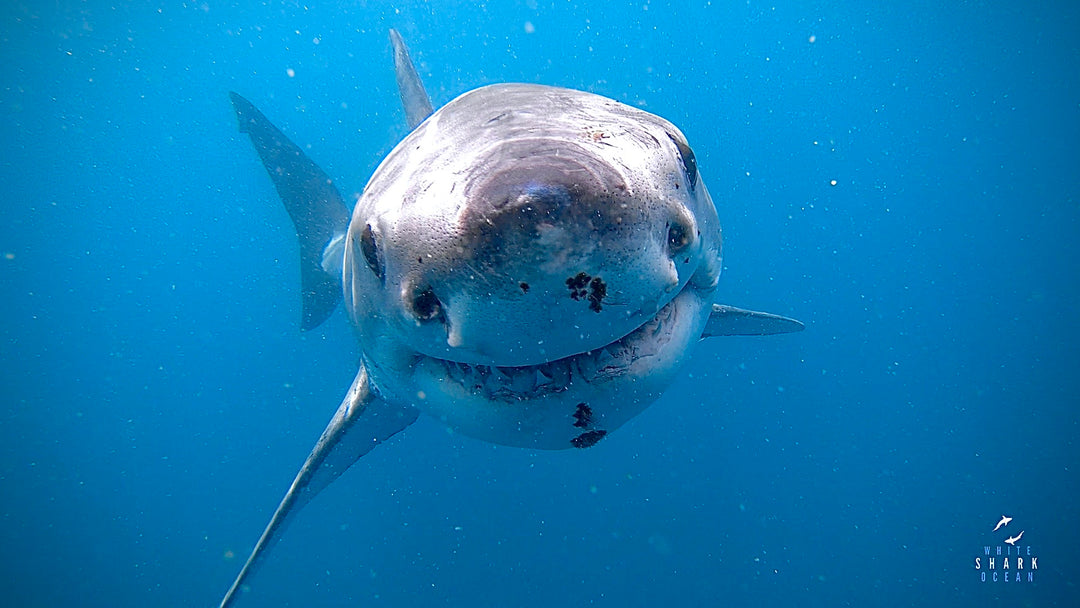
The term "ghost shark" has circulated in marine biology circles for years, but it gained new weight in 2020 when researchers at the University of Bologna published a landmark genetics study revealing something extraordinary. The great white sharks that have historically inhabited the Mediterranean are not simply visitors that wandered in from the Atlantic. They are a genetically distinct population — isolated from their Atlantic relatives for approximately 3.2 million years.
That date is not random. Around 3.2 million years ago, during the Late Pliocene epoch, sea levels and oceanic circulation patterns shifted in ways that effectively severed the Mediterranean from the broader Atlantic gene pool. Great white sharks already present in the Mediterranean were gradually cut off. Over millions of years, they evolved along a separate trajectory.
"This is not a population that wanders in from the Atlantic," said Dr. Alessia Ferrari, one of the study's lead authors. "These are Mediterranean sharks. They belong to the Mediterranean. They always have."
160 Years of Near-Misses
The scientific mystery runs deeper than most people realise. There have been more than 100 documented great white shark sightings in the Mediterranean since formal records began in the 1860s — from Spain and France to Italy, Malta, Greece and the Adriatic. Some of these encounters involved very large sharks. One individual recorded near Malta in the 1980s was estimated at over five metres.
Yet despite this long historical record, no confirmed nursery site, pupping ground or overwintering area has ever been identified in the Mediterranean. No one has found where these sharks breed, where they give birth, or where they spend the majority of their time. They appear, occasionally, then vanish — earning them the name that has stuck: ghost sharks.
Why Are They So Rarely Seen?
Several hypotheses have been advanced. The Mediterranean is heavily trafficked by commercial shipping, fishing vessels and leisure craft, which may push sharks into deeper, less accessible waters. The basin is also notably warmer than the open Atlantic, and great whites — as mesothermic animals that regulate body temperature — are sensitive to thermal gradients. Deeper water offers the cooler, well-oxygenated conditions they prefer.
There is also the sobering reality of population size. Three million years of geographic isolation means the Mediterranean population has never been large. In the past century, bycatch, targeted hunting, and the dramatic reduction of their prey species have almost certainly reduced their numbers to critical levels. Some researchers believe the current Mediterranean population may be in the dozens, not the hundreds.
The Sicilian Footage: What It Tells Us
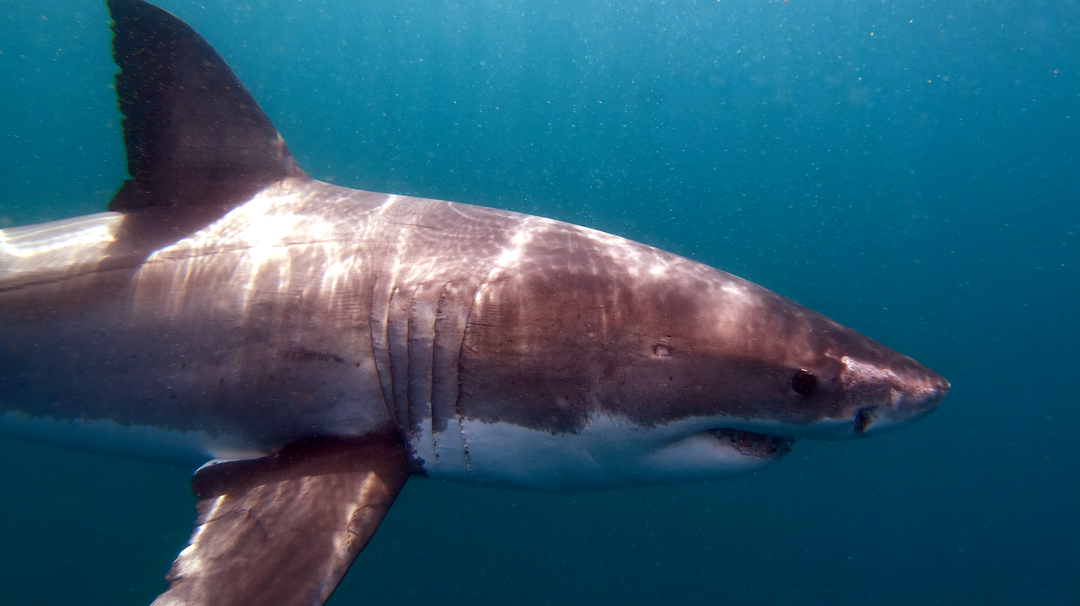
The May 2026 footage from off Sicily is significant for several reasons. The shark observed appears to be a sub-adult — possibly four to five metres — in good body condition, moving purposefully in clear water at moderate depth. The location, in the Strait of Sicily between mainland Italy and the island, has historically been one of the more frequently cited great white sighting areas in the central Mediterranean.
For researchers, the key question is not simply whether a shark was present, but whether it is part of a self-sustaining local population or an occasional visitor. The genetic data from the 2020 study strongly suggests the former — but confirming an active breeding population would require systematic acoustic tagging, tissue sampling and long-term survey work of a kind that has never been properly funded in the region.
Conservation at the Edge
Great white sharks have been fully protected in the Mediterranean under the Barcelona Convention since 2018, and the species is listed on CITES Appendix II. But legislative protection means little without enforcement, and Mediterranean fisheries remain heavily overlapping with areas where ghost sharks have historically been seen. Bycatch is rarely reported and rarely prosecuted.
The 2026 footage has reignited calls for a dedicated Mediterranean great white research programme — something marine conservation organisations including MedSharks and the IUCN Shark Specialist Group have been advocating for years. If there is a breeding population still clinging on in the Mediterranean after 3.2 million years, the window to understand and protect it may be closing faster than we think.
A Story That Begins in Mossel Bay
Here in South Africa, we understand more than most what it means to watch a great white shark population under pressure. The waters off Mossel Bay, Gansbaai and False Bay were once among the most reliable great white habitats in the world. The changes we have witnessed over the past decade — and the science that has followed — are a direct parallel to what Mediterranean researchers fear is happening slowly in their own waters.
The ghost sharks of the Mediterranean are a reminder that great white sharks are not the invincible predators of popular imagination. They are vulnerable. They are slow to reproduce. And three million years of evolutionary history can be undone in a generation if the pressures are severe enough.
The question is whether the footage from Sicily represents the last chapter of a ghost story — or the beginning of a recovery.
Passionate about great white shark conservation? Experience these extraordinary animals in their natural habitat with White Shark Ocean in Mossel Bay. Visit whitesharkocean.com.
Frequently Asked Questions
Are there really great white sharks in the Mediterranean Sea?
Yes — there is strong scientific and anecdotal evidence that a small, genetically distinct population of great white sharks has existed in the Mediterranean for millions of years. A 2020 University of Bologna genetics study confirmed that Mediterranean great whites have been isolated from Atlantic populations for approximately 3.2 million years, making them a unique and separate lineage. Sightings have been recorded from Spain, France, Italy, Malta, Greece and the Adriatic, though confirmed sightings have become increasingly rare over recent decades.
Why are Mediterranean great white sharks called "ghost sharks"?
The name reflects both their rarity and their elusiveness. Despite over 100 documented sightings since the 1860s, no nursery site or breeding ground has ever been identified in the Mediterranean. These sharks appear occasionally in various parts of the basin, then vanish without trace. Researchers believe they may inhabit deep water for much of their lives, surfacing only occasionally in shallower coastal areas. Their near-invisibility despite a confirmed presence over millions of years earns them the ghost designation.
How did great white sharks become isolated in the Mediterranean?
Around 3.2 million years ago during the Late Pliocene, shifts in sea levels and oceanic circulation patterns gradually closed off the free genetic exchange between the Mediterranean and the Atlantic Ocean. Great white sharks already living in the Mediterranean became reproductively isolated. Over millions of years they evolved as a genetically distinct population — different enough from Atlantic great whites to be measurably separate, but similar enough to be recognisably the same species.
How many great white sharks are left in the Mediterranean?
No reliable population estimate exists because no systematic survey has ever been conducted. Based on the dramatically reduced sighting frequency over the past 40 years, many researchers believe the Mediterranean population may number in the dozens. The population was probably never large due to its geographic isolation, and has faced intense pressure from bycatch, targeted fishing and prey depletion over the past century. Some scientists consider the Mediterranean great white population to be critically endangered or functionally on the brink of extinction.
Are great white sharks protected in the Mediterranean?
Great white sharks have been fully protected under the Barcelona Convention (the Convention for the Protection of the Marine Environment and the Coastal Region of the Mediterranean) since 2018. They are also listed on CITES Appendix II, which regulates international trade. However, enforcement in Mediterranean waters is inconsistent, and bycatch remains a serious ongoing threat. Conservation organisations including MedSharks and the IUCN Shark Specialist Group continue to advocate for a dedicated Mediterranean great white research and protection programme.






Leave a comment