


Shark Week 2026: What's On, What's Real, and What to Watch
24 June 2026 | White Shark Ocean
Shark Week returns on Sunday 26 July 2026, and this year's lineup is one of the strongest in recent memory. Twenty new premieres across seven nights on Discovery, covering everything from record-breaking great whites in the North Atlantic to the orca-versus-shark war playing out in South African waters. If you follow sharks seriously, there is a lot here worth watching — and a few questions worth asking about what the cameras capture versus what the science actually says.
Here is our guide to this year's Shark Week: what's on each night, which stories connect to the most important research happening right now, and why the real experience will always surpass anything on a screen.

The Full Schedule
Sunday 26 July
K-Pop Shark Heroes (8pm) — Actor Ken Jeong and singer Rei Ami head to the Korean Peninsula to investigate recent shark encounters and work to reshape public perceptions of sharks across East Asia.
Air Jaws: Red, White and Breach (9pm) — Scientists investigate whether the legendary breaching great whites of South Africa's False Bay have begun appearing in American waters.
Invasion of the Mega Sharks (10pm) — Dr. Neil Hammerschlag and Paul de Gelder hunt for "Big Rose," a record-breaking great white believed to be one of the largest predators in the North Atlantic, at a newly discovered hotspot off Nova Scotia.
Monday 27 July
Bull Shark Dinner Bell (8pm)
House of Sharks (9pm)
Biggest Mako on Earth (10pm)
Tuesday 28 July
Jurassic Sharks (8pm) — Exploring shark species that have survived virtually unchanged for tens of millions of years.
Jaws vs. Orcas (9pm) — A direct investigation into the orca-great white dynamic that has reshaped South Africa's marine ecosystem and was the subject of the recent 60 Minutes investigation.
Chum Island: Catching a Killer (10pm)
Wednesday 29 July
Expedition X: Atomic Sharks (8pm)
Expedition Unknown: Shark Secrets (9pm) — Josh Gates investigates previously undocumented shark behaviour patterns.
Alien Sharks: Untamed America (10pm)
Thursday 30 July
What Shark Attacked? (8pm)
How to Train a Great White (9pm) — What do we actually know about conditioning and learning in great white sharks?
Ultimate Shark Dive (10pm) — Cliff diver Molly Carlson attempts a record-setting plunge into shark-filled waters.
Friday 31 July
Secrets of the Great White Kill (8pm)
Sharkzilla Takes New York (9pm)
My Strange Shark Addiction (10pm)
Saturday 1 August
Great White Highway (8pm) — Following great white migration routes along the US Eastern Seaboard.
Thresher Shark: Stun to Kill (9pm)
The Shows Worth Watching Most Closely
Invasion of the Mega Sharks is the one we're most interested in. Dr. Neil Hammerschlag is one of the most credible shark researchers working today — his long-term False Bay study, which documented the trophic collapse that followed the disappearance of great whites there, was among the most important marine ecology papers published in recent years. His search for Big Rose connects directly to the OCEARCH tracking programme that revealed the great white's Gulf of Mexico winter migration — one of the most significant discoveries of 2026. If any show this year pushes the science forward, it's likely to be this one.
Jaws vs. Orcas is essential viewing given everything that's happened in South African waters over the past decade. The orca-versus-great white dynamic — Port and Starboard, the surgical liver extractions, the cascade of ecological consequences — has been one of the defining stories in marine biology since 2015. A Shark Week special dedicated to it will reach millions of people who are only just becoming aware of this story. How accurately it portrays the scientific debate (rather than sensationalising it) will be worth watching.
Air Jaws: Red, White and Breach revisits one of the most iconic shark behaviours ever filmed. The original Air Jaws series, shot in False Bay, introduced the world to the spectacular breach-hunting behaviour of great whites pursuing seals at high speed — a behaviour now rarely seen in False Bay due to the shark population displacement discussed in our recent posts. The question of whether this behaviour has appeared in American waters is a genuinely interesting scientific one.
How to Train a Great White connects directly to the emerging research on great white learning and cognition — a topic we covered this week in our piece on the secret social lives of great white sharks. The title is deliberately provocative, but the underlying science is serious: white sharks demonstrably learn, adapt, and modify behaviour based on experience in ways that deserve proper scientific investigation.
A Note on What Shark Week Gets Right — and Where to Stay Critical
Shark Week has a complicated relationship with science. At its best, it deploys serious researchers on meaningful questions and brings credible findings to a global audience of tens of millions. At its worst, it has a history of sensationalism, dubious reconstructions, and prioritising spectacle over accuracy — the infamous 2013 "Megalodon: The Monster Shark Lives" mockumentary being the most cited example.
The 2026 lineup looks stronger than most recent years, with researchers like Hammerschlag lending genuine scientific credibility to the flagship specials. But the general principle holds: watch with curiosity, and bring your questions. When a show tells you something surprising about shark behaviour, it's worth checking whether that finding has been peer-reviewed, replicated and published — or whether it's a single dramatic observation being carried further than the data can support.
The researchers we trust most — Hammerschlag, Gennari, Kock, the OCEARCH teams — are rigorous precisely because they are cautious about their conclusions. Good shark science is slow. Shark Week moves fast. The gap between the two is where critical thinking lives.
Better Than Any Screen
Every year, Shark Week creates a generation of new shark enthusiasts. People watch a great white breach, or see a tagged shark tracked across thousands of kilometres of open ocean, or learn for the first time about the trophic cascade in False Bay — and something shifts. The shark stops being a monster and becomes what it actually is: one of the most extraordinary animals that has ever lived.
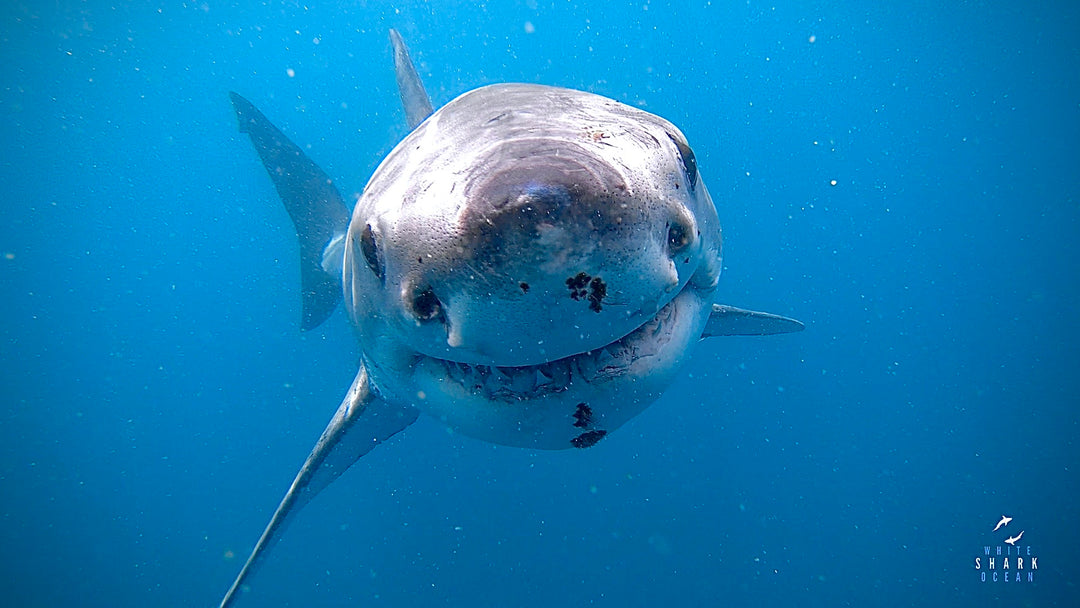
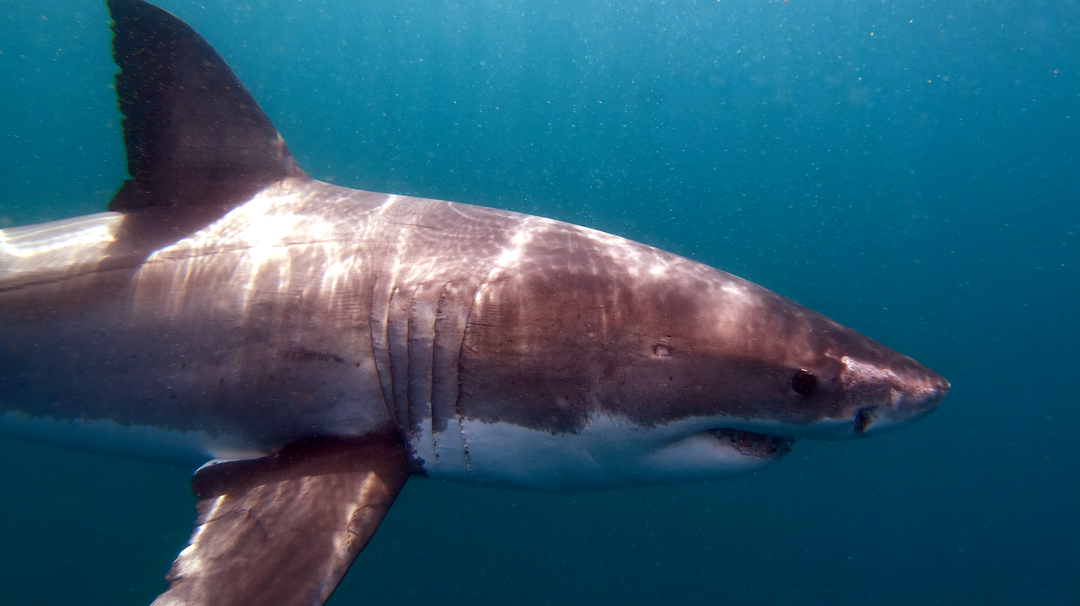
If Shark Week does that for you this year, or for someone you know, the next step is straightforward. Come and see them. Not on a screen — in the water, in Mossel Bay, in their natural habitat. The experience of a great white shark passing a cage at arm's length, curious and unhurried, is something no television production has ever fully captured. It changes the way you think about the ocean, and about our place in it.
Shark Week runs 26 July – 1 August 2026 on Discovery Channel. We'll be on the water in Mossel Bay the whole time — and beyond.
Don't just watch. Experience. Book a great white shark encounter with White Shark Ocean in Mossel Bay at whitesharkocean.com.
Frequently Asked Questions
When is Shark Week 2026?
Shark Week 2026 runs from Sunday 26 July to Saturday 1 August on Discovery Channel. It kicks off at 8pm ET/PT on Sunday 26 July with 20 new premieres across the seven nights. Shows are also available to stream on Max.
What is the best show on Shark Week 2026?
For viewers interested in serious shark science, Invasion of the Mega Sharks (Sunday 26 July, 10pm) is the standout — led by Dr. Neil Hammerschlag, one of the most credible shark researchers currently active, investigating a record-breaking great white off Nova Scotia. Jaws vs. Orcas (Tuesday 28 July, 9pm) is essential for anyone following the South Africa story, and Air Jaws: Red, White and Breach (Sunday 26 July, 9pm) revisits one of the most iconic shark footage series ever made.
Is Shark Week scientifically accurate?
Shark Week varies considerably in scientific rigour from show to show and year to year. The 2026 lineup features credible researchers including Dr. Neil Hammerschlag and Josh Gates, which bodes well for the flagship specials. However, Shark Week has a history of sensationalism and has aired content in the past (most notoriously the 2013 Megalodon mockumentary) that was not grounded in real science. The best approach is to watch with genuine curiosity but verify surprising claims against peer-reviewed research.
What is Air Jaws and why is it famous?
Air Jaws is one of the most iconic nature documentary series ever made, originally filmed in False Bay, South Africa, in the early 2000s. It captured the extraordinary breach-hunting behaviour of great white sharks launching themselves completely out of the water while pursuing Cape fur seals at high speed. The footage introduced millions of people worldwide to a side of great white behaviour that had never been documented on film before. Tragically, this behaviour is now rarely seen in False Bay, where great white shark numbers have collapsed dramatically since 2015.
Where can I see real great white sharks outside of Shark Week?
Mossel Bay, South Africa, remains one of the best places in the world to see great white sharks in their natural habitat. White Shark Ocean operates cage diving and surface viewing expeditions from Mossel Bay year-round, giving visitors a chance to encounter these animals up close while supporting local shark conservation. Unlike a television screen, there is no edit — just you, the ocean, and one of the most remarkable predators on Earth. Visit whitesharkocean.com to book.







Leave a comment